
Wow, that surprised me. I remember the first time I opened a Solana block — it felt like peeking under a hood. My instinct said “fast and tidy,” though actually, wait — there were layers I didn’t expect. On one hand the throughput is impressive; on the other hand, tracing a token across swaps and program-derived addresses can be a headache. Seriously? Yes — but there are tools and habits that cut the noise down.
Here’s the thing. A good explorer turns raw ledger rows into a human story. It maps accounts, programs, and transfers so you can answer questions quickly. When I teach people to investigate a transaction, I start with context: who sent it, which program handled it, and whether tokens moved between known or new addresses. Hmm… sometimes the first glance lies; you need to dig.
I’ll be honest — I used to rely on intuition alone. That got me into trouble very very early on. Initially I thought signatures alone were enough to prove intent, but then realized programs and PDAs can mask behavior in ways that signatures don’t reveal. So I learned to cross-check metadata, parse SPL token logs, and watch fee payers. That routine saved me more than once.
Short checklist first. Look for the signature, slot, block time, involved accounts, and program logs. Then inspect pre- and post-balances, token balance changes, and any inner instructions. If you find token transfers, follow the mint and the associated token accounts to see where balances moved. Also check the recent activity of each account — bots, swaps, mints, and burn events show patterns fast. Oh, and by the way… always copy the signature for later.
Okay, so check this out — when tracking a token the mint is your anchor. Tokens share a mint address, and that mint points to supply, decimals, and freeze authorities. From there you can enumerate associated token accounts and watch distribution. Sometimes an account holds many mints; sometimes a program wraps or unwraps SOL and obfuscates flows, so keep an eye on inner instructions and program IDs. My instinct told me to trust the UI less and the logs more.
Where explorers help (and where they don’t)
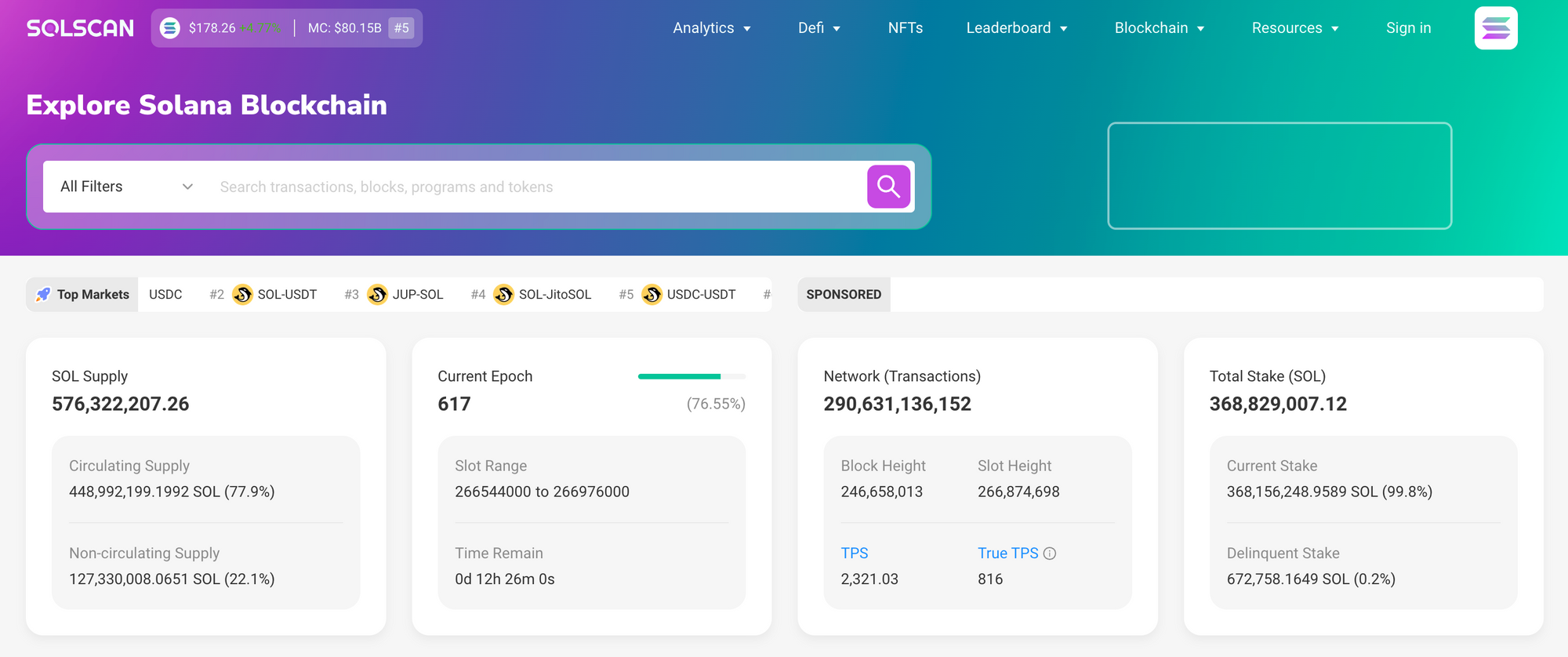
Explorers like solscan make cross-referencing easier by exposing logs, token transfers, and decoded instructions all in one place. They index token holders, chart historical transfers, and surface program interactions that are otherwise buried in raw RPC responses. But they’re not perfect — some decoded instructions are approximate, and stateful program behavior sometimes requires checking source code or on-chain program accounts directly. I’m biased, but pairing an explorer with command-line RPC calls and a bit of on-chain reading is the best combo.
When you open a transaction: read the summary first, then the logs. Short term intuition helps you decide what to ignore. Longer analysis follows: trace inner instructions, confirm token account changes, and reconcile balances with the pre/post view. If something smells off, quarantine the signature and dig deeper — look at the slot’s other transactions and any block-level anomalies. Really? Yes — anomalies show up across multiple transactions sometimes.
One practical trick: follow token accounts, not just user addresses. A user address may own many token accounts; token accounts are the real holders per mint. To see distribution, export the token holders list or scan the recent transfers to observe clustering. Sometimes whale accounts hide behind PDAs or program-owned accounts; detecting that requires noticing the owner field and cross-referencing program IDs. This step separates noise from meaningful movement.
Here’s what bugs me about explorer UIs: they often assume you know what you’re looking at. The interface can be friendly for simple lookups, but for investigations you need patience and a bit of grind. The tools can help parse logs, but they won’t interpret intent for you. So, build a small habit: always record the signature, mint, and program IDs before jumping to conclusions. Trust but verify, and verify again.
Example scenario — a rug-check. First, find the mint. Next, look at the token supply and who owns large proportions. Then scan recent mints — has supply suddenly increased? Look for privileges like mint authority and freeze authority changes. Finally, inspect liquidity pools and major holders for sudden dumps. On one hand this is straightforward; on the other hand, deceptive patterns often hide in contract-level transfers and multisig rotations.
Another useful angle: fee payer analysis. Fee payers often reveal who is orchestrating a set of transactions. If multiple suspicious txns share a fee payer, you probably have a coordinated actor. Then watch inner instructions: swap, transfer, deposit, withdraw — these tell the story. If you see a sequence of swaps where a token is pushed through low-liquidity pools, red flags should go up. My gut has said somethin’ like “hmm…” more than once in these cases.
Tools and habits to adopt: export holder lists, watch for patterns across slots, use the explorer’s decoded instruction view, and combine that with RPC getProgramAccounts for deeper checks. Also, keep a private note of wallets you’ve identified as safe or risky; it saves time. I’m not 100% sure about every edge case, but these steps cut the majority of the noise.
Now a real tip from the trenches — save templates of queries you run often. I have a few saved ones for mint holders, token vesting patterns, and common program signatures. It speeds up triage and reduces the likelihood of mistake. Also, check historical activity before declaring a token dead or alive — sometimes a long pause is just a pause, and sometimes it’s abandonment.
FAQ: Quick answers when you’re in a hurry
How do I quickly verify a token’s legitimacy?
Start with the mint: check total supply, mint authority, and freeze authority. Then scan top holders for concentration, inspect recent mint events, and search for known audit or project addresses. If you see sudden supply inflation or centralized control of mint keys, proceed with caution. Also watch for suspicious program owners and rapid transfers into obscure accounts.
Which fields on a transaction page matter most?
Signature, slot, block time, fee payer, involved accounts, program IDs, pre/post balances, inner instructions, and logs — in that rough order. The decoded instruction list often speeds interpretation, but don’t skip raw logs when things feel unclear. Small details like rent-exempt transfers or created token accounts can change the interpretation of a transaction.
When should I use an RPC call instead of the explorer UI?
Use RPC when you need bulk data, precise state queries, or to verify explorer results. For automated scans, historical sweeps, or when an explorer shows inconsistent decoding, RPC is your fallback. It’s a bit more work but gives you trusted, raw on-chain data to reason from.
